News
INEC SECURES NUC BACKING ON NOMINATION OF CREDIBLE ACADEMICS, ALIGNMENT OF UNIVERSITY CALENDARS FOR 2027 ELECTIONS
INEC SECURES NUC BACKING ON NOMINATION OF CREDIBLE ACADEMICS, ALIGNMENT OF UNIVERSITY CALENDARS FOR 2027 ELECTIONS
AJAGBE ADEYEMI TESLIM
SPONSORED BY: H&H
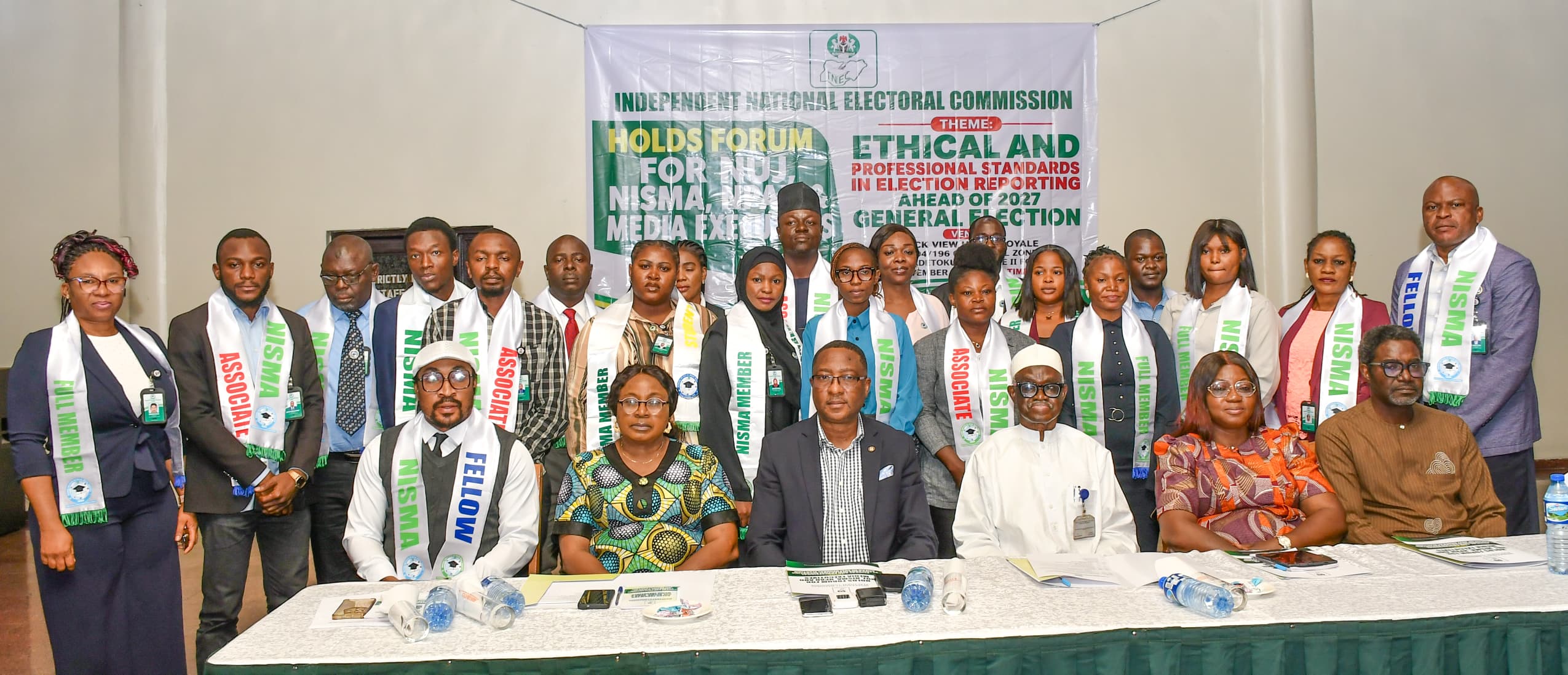
The Chairman of the Independent National Electoral Commission (INEC), Prof. Joash Amupitan, SAN, has secured the commitment of the National Universities Commission (NUC) to support the 2027 general election through the nomination of credible academic personnel and the alignment of university academic calendars with the election timetable.
The assurance was given by the Executive Secretary of the NUC, Prof. Abdullahi Yusufu Ribadu, on Monday 23RD November, 2026 in Abuja during a courtesy visit by the INEC Chairman, who was accompanied by National Commissioners and senior officials of the Commission.
Prof. Amupitan said the visit was a deliberate strategic partnership at the final operational stretch towards the Presidential and National Assembly elections on Saturday, 16th January 2027, and the Governorship and State Houses of Assembly elections on Saturday, 6th February 2027.
He noted that the Nigerian academic community had for over a decade served as the backbone of collation and declaration of results, with Vice-Chancellors serving as Collation and Returning Officers across the Federation.
The Chairman said the Commission had introduced operational, technological and security reforms to make the work of its university partners safer and less contentious.
He said polling unit results on Form EC8A would undergo automated arithmetic consistency and over-voting checks before transmission to the INEC Result Viewing Portal (IReV), while the Commission had procured 57,000 new Bimodal Voter Accreditation System (BVAS) devices and lowered the voter-to-device ratio to 850 per machine.
Prof. Amupitan added that the Commission would conduct a nationwide mock accreditation and result transmission exercise across the 36 states and the Federal Capital Territory (FCT) on Saturday, 28th November 2026.
On security, he said the Inter-Agency Consultative Committee on Election Security (ICCES) had been decentralised to every Local Government Area and Registration Area, with dedicated security cordons and escort protocols around collation centres.
He also drew attention to Sections 96 and 97 of the Electoral Act 2026, which criminalise violence, abusive rhetoric and threats against electoral personnel, and Section 148, which empowers the Commission to prosecute offenders directly. “No Returning Officer or Collation Officer will be left to stand alone against lawlessness,” he said.
The INEC Chairman requested the NUC’s support in four areas: the timely nomination of academic staff of verified non-partisan standing, the alignment of academic calendars with the election dates, collaboration on voter education and counter-disinformation on campuses, and the welfare and recognition of academics deployed for election duty.
Responding, Prof. Ribadu congratulated Prof. Amupitan on his appointment, describing him as a lawyer and academic of international repute and “a round peg in a round hole.”
He said the NUC would engage Vice-Chancellors on the nomination of academic staff, including through an online meeting, and would transmit a circular to the universities once INEC forwards a formal letter on the matter.
“Since we want to have credible elections, we also have to have credible personnel,” the Executive Secretary said, adding that all ad hoc personnel should take an oath of neutrality.
On the academic calendar, Prof. Ribadu said the entire election cycle would last no more than four weeks, and suggested that universities could adopt a three-to-four-week break to accommodate it.
“We will discuss with the Vice-Chancellors and have their calendars tweaked in such a way that it will not affect the elections, nor will it affect the studies of the students,” he said.
He said students could also support voter education through campus clubs, and expressed confidence that the Commission would deliver a transparent, free and fair election that would serve as an example to other African countries.
Prof. Ribadu further proposed expanded collaboration between the two institutions, including student internships at INEC offices, a possible programme in electoral studies, and joint research on artificial intelligence, robotics and data analytics.
NO PVC, NO VOTING: INEC DISMISSES SOCIAL MEDIA CLAIMS, WARNS AGAINST “RIG AND DIE” SLOGAN
The Independent National Electoral Commission (INEC) has described as false claims circulating on social media that Nigerians will be able to vote in the 2027 General Election without their Permanent Voter Cards (PVCs), warning that such misinformation could disenfranchise citizens and fuel tension on election day.
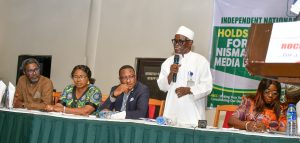
The National Commissioner and Chairman, Information and Voter Education Committee (IVEC), Mohammed Kudu Haruna, made the statement on Monday 23RD November, 2026, in Abuja at the INEC Forum for the Nigeria Union of Journalists (NUJ), the Nigerian Institute of Social Media Analysts (NISMA), the Newspaper Proprietors Association of Nigeria (NPAN) and media executives on “Ethical and Professional Standards in Election Reporting Ahead of 2027 General Election.”
Represented by the Deputy Director, Information and Publicity, Mr Wilfred Ifogah, the National Commissioner said the claims, which he noted were gathering pace on X, were coming largely from anonymous or unverifiable accounts.
“Whatever the version, whether that the BVAS has made the card unnecessary or that a name on the register will suffice, the message is the same: that the card has become a formality. It is false,” he said.
He explained that Section 47(1) of the Electoral Act 2026 requires every person intending to vote to present a valid PVC for accreditation at the polling unit where he or she is registered.
According to him, the Bimodal Voter Accreditation System (BVAS) verifies the card and the biometrics of the person presenting it.
“It confirms the voter; it does not replace the card. No PVC, no accreditation; no accreditation, no ballot paper,” he said.
The National Commissioner warned that a citizen who believes the falsehood may never collect his or her card, or may set out on election day without it and be turned away.
“That citizen will have been disenfranchised by a lie,” he said.
He said that, multiplied across thousands of polling units, such disenfranchisement would result in anger, long queues, confrontation and suspicion, and a ready-made grievance for anyone who wished to discredit the outcome. He urged voters to collect their cards without delay and to ask INEC whenever in doubt.
Mallam Haruna also expressed concern over what he described as a worrying rise in negative and threatening rhetoric as the election draws near, including abusive exchanges between supporters of rival candidates, open threats against opponents and sweeping attacks on the integrity of institutions, including the Commission and its staff.
“All of it carries a cost, because language that casts fellow citizens and electoral officials as enemies to be defeated, rather than compatriots to be persuaded, prepares the ground for violence,” he said.
Specifically, he condemned the growing use of the phrase “rig and die.”
“Whatever its originators intend, and some insist it is aimed only at those who rig, a slogan that links an electoral offence to death is dangerous,” he said.
He noted that the people most exposed at polling units were not powerful politicians but ordinary Nigerians serving as presiding officers, assistant presiding officers, collation officers and other ad hoc staff, as well as voters, party agents and observers.
“A charged crowd can easily mistake a delayed result, a technical difficulty or a rumour for rigging, and a mistake of that kind can never be undone,” he said.
He stated that rigging is a crime for which the Electoral Act 2026 prescribes penalties, and that the remedy lies in the law, through vigilant observation, transparent results on the INEC Result Viewing (IReV) portal, formal complaints to the Commission and the security agencies and, where necessary, the courts.
“The right to life is guaranteed by Section 33 of the Constitution, and no one may take it on suspicion,” he said.
The National Commissioner appealed to political leaders and their supporters to retire such language, and urged the media not to amplify it as a headline, hashtag or trending topic.
“Threats of violence are not robust political debate; they are offences, and the security agencies have a duty to act on them. Nor should journalists themselves be intimidated for doing their work. A free press and a safe election go together,” he said.
He urged the media to report such rhetoric, where it is news, with its context, the legal position and the safety of electoral officials in view.
Speaking on the role of the press, Mallam Haruna said public confidence in elections rested heavily on what journalists report.
“Most citizens will never see a polling unit being set up, a BVAS device at work or a result sheet being signed. They will know these things only through what you tell them. Public confidence in our elections therefore rests, to a remarkable degree, on the credibility of your reporting,” he said.
He said ethical reporting was a duty owed to citizens. “Ethical election reporting is not a favour to INEC; it is a service to the public,” he said.
He listed verification before publication, labelling projections and unofficial tallies for what they are, separating news from political advertising, giving fair space to all candidates and parties, avoiding hate speech, and correcting errors promptly and prominently as standards already enshrined in the journalists’ own Code of Ethics.
He reminded the media that results are declared only by the Commission through its duly appointed Returning Officers, and urged reporters to attribute their sources, to distinguish clearly between what they have seen and what they have been told, and to ensure that they neither obstruct election officials nor compromise the secrecy of the ballot.
On disinformation, the National Commissioner asked journalists to treat “every viral post, screenshot, audio clip and video as a lead to be checked, not a story to be run,” and to check any claim about INEC with the Commission before it goes out.
He reminded participants that creating or circulating fake accounts, doctored images, cloned voices and AI-generated content is an offence under the Cybercrimes Act, and asked media platforms, particularly those of NISMA, to be “the place where a lie meets the truth and loses.”
Citing recent off-cycle elections, he recalled that vote buying was the most troubling feature of the Ekiti election in June, where fewer than four in every ten registered voters turned out.
He added that in the Osun election in August, false claims of ghost and hired voters, together with AI-generated content, circulated on social media while collation was ongoing, forcing the Commission to spend valuable time countering them. He noted, however, that independent observers found the declared results consistent with the tallies from the polling units.
“The lesson is plain: where accurate information travels as fast as falsehood, public trust is protected,” he said.
He also said coverage of the elections must reflect the full electorate.
“Women, young people and persons with disabilities are too often absent from election stories, except as statistics,” he said.
The National Commissioner said the Electoral Act 2026 had given the Commission new tools and responsibilities, including making the use of BVAS compulsory for voter accreditation and requiring the upload of pictures of polling unit results to the IReV portal.
He urged participants to ask searching questions during the presentations on these innovations, the key provisions of the Act and voting procedures.
“We would rather you ask us now than speculate later, because the better you understand our processes, the more accurately you can explain them to the public,” he said.
He announced that INEC will on Saturday, 28 November, conduct a nationwide mock accreditation and voting exercise across all 36 states and the Federal Capital Territory, in two polling units per Registration Area.
According to him, polling units will open by 8:30 a.m., with accreditation running from 8:30 a.m. to 2:30 p.m. The exercise will simulate the Presidential election and test the BVAS and the upload of results to the IReV portal.
“It is a test, not an election, and no winners or losers will be declared. Its value lies in finding faults while there is still time to fix them, so a fault recorded on Saturday is the exercise doing its job,” he said.
He asked the media to report it as a test, and appealed to voters in the selected polling units to come out with their PVCs and take part.
Mallam Haruna said the Commission also holds itself to account, stating that any staff or ad hoc official who compromises an election would face the full weight of the law. He added that the Act provides penalties for result manipulation, vote buying and the frustration of the upload of polling unit results to the IReV.
He said the Commission was working to have officials and materials at polling units by about 7:30 a.m. on election day. “Delays breed suspicion,” he said.
Recalling that only 26.72 per cent of registered voters voted in the 2023 presidential election, he asked the media to sustain voter education on PVC collection and turnout, investigate and expose vote buying, and partner with the Commission in defeating disinformation, deepfakes and fake accounts.
He concluded with an appeal to the journalists.
“In a few weeks, the Nigerian voter will make a decision in the privacy of a voting cubicle. What goes into that decision, the facts, the tone and the trust, will be shaped by what you publish between now and then. Let us make sure it is the truth,” he said.
The Presidential and National Assembly elections hold on Saturday, 16 January 2027, while the Governorship and State Houses of Assembly elections follow on Saturday, 6 February 2027. Campaigns, which opened on 19 August and 9 September 2026 respectively, will end 24 hours before polling day.
In her remarks on the objectives of the forum, the Director, Voter Education and Publicity (VEP), Mrs Victoria Eta-Messi, represented by Mr Ifogah, said the forum was part of the Commission’s effort to build a working partnership with the media ahead of the 2027 General Election.
“We cannot do this alone… We need the media on the side of the facts,” she said.
She said the forum was aimed at promoting a shared understanding of ethical and professional standards in election reporting, briefing participants on the Electoral Act 2026 and INEC’s technological innovations, and strengthening the media’s role in countering misinformation, disinformation and hate speech.
She said the Commission expected participants to return to their newsrooms as ambassadors of accurate reporting, to consider election desks, editorial guidelines and fact-checking arrangements for the 2027 cycle, and to give sustained space and airtime to voter education, including PVC collection.
In her welcome remarks, the Resident Electoral Commissioner for the FCT, Dr Hale Gabriel Longpet, represented by the Administrative Secretary, Mrs Bimbo Oladunjoye, described the media as an indispensable partner in the delivery of credible elections.
“Elections are not the sole responsibility of the electoral management body; rather, credible, peaceful, and transparent elections require active collaboration among all critical stakeholders. Chief among these stakeholders is the fourth estate of the realm,” she said.
In a goodwill message, the NUJ President, Comr. Yahaya Alhassan, represented by the Zonal Vice President, Zone D, Mr Adeiza Momoh Jimoh, commended INEC for the engagement and said the media remained a critical pillar of democracy.
“We must, therefore, collectively work towards an electoral environment where accurate information takes precedence over sensationalism, facts prevail over falsehood, and public interest remains at the heart of media practice,” he said.
He called on INEC to continue to strengthen its relationship with the media through timely, transparent and credible information dissemination, noting that the media could only discharge its responsibilities effectively when it had access to accurate and reliable information from the electoral umpire.
The National Coordinator of NISMA, Dr Christian Eze, said social media users were part of the electoral information ecosystem and bore responsibility for the integrity of the 2027 General Election.
“Anybody who creates, who disseminates, who reposts, who amplifies any political information, that person has a responsibility towards the integrity of the 2027 general election,” he said.
He said Nigerians often shared what was emotionally powerful rather than what was true.
“Nigerians hardly share what is true. Rather, we share what is emotionally powerful,” he said, adding that unlike traditional media, social media had no editorial process, as a post could go viral within a minute of being sent.
Citizens may verify information through the INEC Citizens Contact Centre on 0700-CALL-INEC (0700-2255-4632), short code 4632, the Commission’s website, inecnigeria.org, and its verified handles @inecnigeria.

