News
100 DAYS TO 2027 ELECTIONS: INEC REASSURES NIGERIANS, INTERNATIONAL COMMUNITY OF COMMITMENT TO NEUTRALITY, INTEGRITY OF THE BALLOT
100 DAYS TO 2027 ELECTIONS: INEC REASSURES NIGERIANS, INTERNATIONAL COMMUNITY OF COMMITMENT TO NEUTRALITY, INTEGRITY OF THE BALLOT
AJAGBE ADEYEMI TESLIM
SPONSORED BY: H&H
The Independent National Electoral Commission (INEC) has reassured Nigerians and the international community of its total commitment to neutrality, operational excellence and the sacred integrity of the ballot box as the country begins the final 100-day countdown to the 2027 General Election.
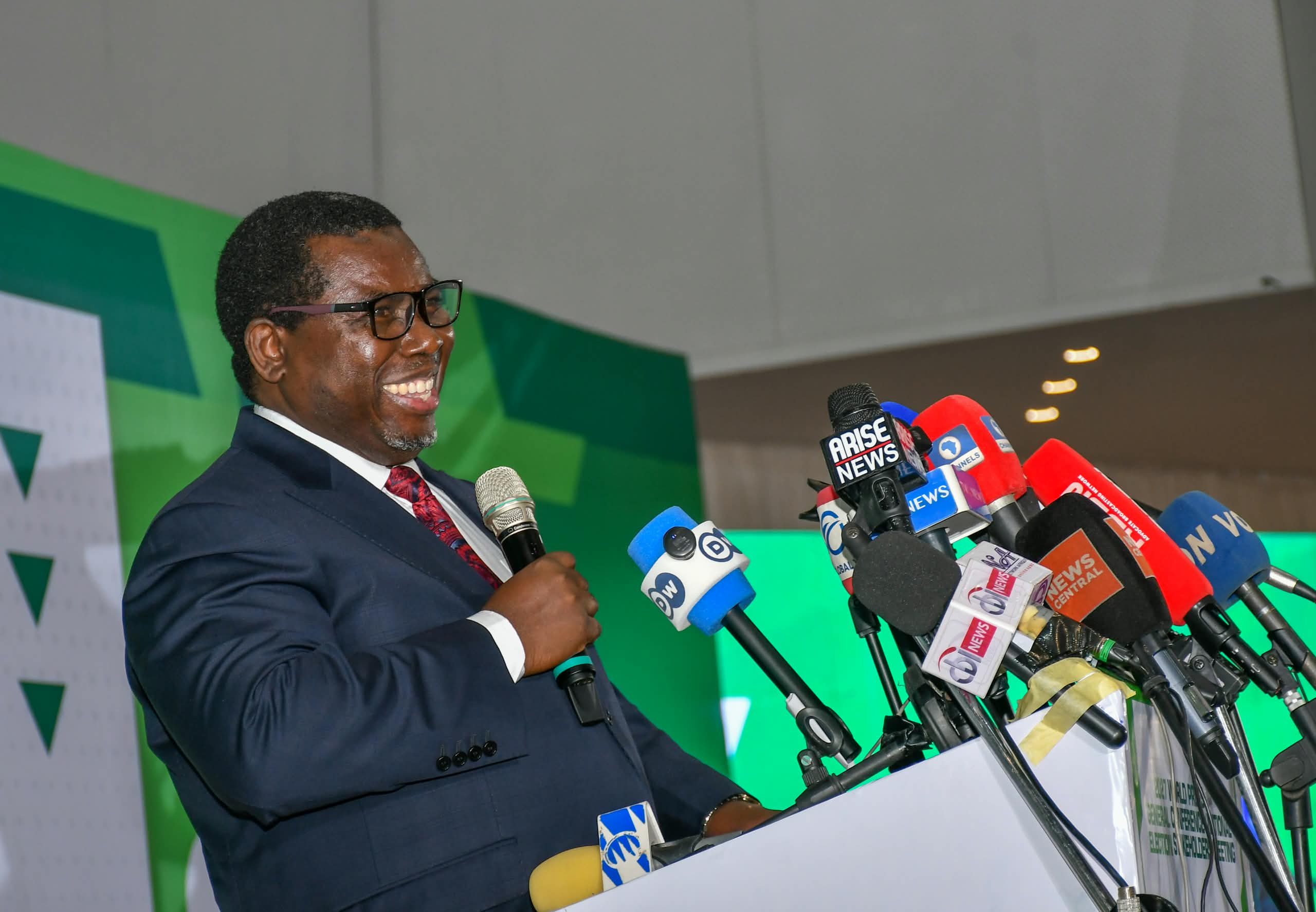
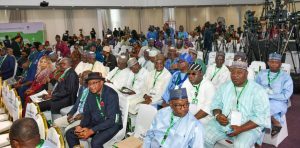
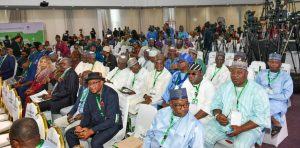
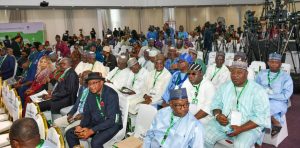
The Chairman of the Commission, Prof. Joash Amupitan, SAN, gave the assurance on Tuesday 6th October, 2026, at the World Press Conference and National Stakeholders’ Meeting marking 100 days to the first ballot, held at the Bola Ahmed Tinubu International Conference Centre, Abuja.
Prof. Amupitan said the Commission had “moved decisively from planning into execution,” noting that its materials were in production, its technology was undergoing rigorous quality assurance, its register was finalised for public display and its workforce was being systematically trained.
“A s we begin this 100-day sprint to the 2027 General Election, we reassure the nation and the international community of our total commitment to neutrality, operational excellence, and the sacred integrity of the ballot box,” he said.
He described the 100-day milestone as “not just a countdown” but “a call to action,” which marks the beginning of the final phase of preparations to ensure that the election serves as a global benchmark for transparency, integrity and peace.
The INEC Chairman recalled that since he assumed leadership of the Commission on 23rd October 2025, the Commission had conducted major off-cycle elections, including the Anambra, Ekiti and Osun Governorship Elections and the FCT Area Council Polls, alongside several federal and state bye-elections.

According to him, reports submitted by local and international observers showed that every one of the polls passed the benchmark of electoral integrity. He added that the elections served as a testing ground for key structural upgrades, including early deployment of ad hoc staff and sensitive materials, agile logistics and intelligence-led security arrangements.
Prof. Amupitan said the Commission issued the Revised Timetable and Schedule of Activities for the 2027 General Election on 26th February 2026, setting out 14 statutory milestones, of which nine had been executed. He added that the timetable had been translated into an operational plan synchronised across the Commission’s 23 Headquarters Departments and Directorates, 36 State Offices, the FCT and all 774 Local Government Area offices.
On funding, the INEC Chairman acknowledged the timely release of statutory allocations by the Federal Government, which he said had enabled the Commission to meet international vendor obligations, finance the production of critical election technology and upgrade infrastructure. He, however, called for the prompt release of the remaining funds to ensure seamless execution of outstanding activities.
On the voter register, he disclosed that the three phases of the Continuous Voter Registration exercise registered a total of 10,772,421 new voters, bringing the National Register of Voters to 103 million. The register will be displayed for public scrutiny from 9th to 15th October 2026, while distribution of Phase 1 Permanent Voter Cards (PVCs) to Local Government centres will begin on Friday, 9th October.
He said 18 of the 22 registered political parties submitted 36 presidential and vice-presidential candidates, while the Final List of Candidates for the National Assembly was published on 12th September 2026. The final list for governorship and State Houses of Assembly candidates will be published on 10th October 2026.
On procurement, Prof. Amupitan said production was advanced for 57,000 new Bimodal Voter Accreditation System (BVAS) devices, some of which had been delivered, while procurement for the printing of ballot papers and result sheets was nearly completed.
He said the Commission had renewed its Memorandum of Understanding with the National Union of Road Transport Workers (NURTW), the Road Transport Employers Association of Nigeria (RTEAN) and the Maritime Workers Union of Nigeria (MWUN) to mobilise over 100,000 vehicles and 4,000 boats for the movement of personnel and materials.
According to him, sensitive materials will move from the Central Bank of Nigeria vaults to the local government areas 72 hours before the polls, reaching all 8,838 Registration Area Centres by 4:00pm on the eve of the election, to ensure that polling units open at 7:30am nationwide.
On technology, the Chairman said a six-day stress-testing exercise of all configured BVAS devices had been scheduled for 23rd to 28th October 2026, while a nationwide mock accreditation exercise will be held in November. He also disclosed that the Commission had established an Artificial Intelligence Division within its ICT Department, operating under mandatory human oversight.
On security, he said the Commission, working through the Inter-Agency Consultative Committee on Election Security (ICCES), would initiate joint training for thousands of Electoral Security Personnel. He added that joint monitoring and undercover surveillance teams would be deployed with the EFCC, ICPC and NFIU to track vote-buying, warning that violators would face immediate arrest and prosecution under the Electoral Act 2026.
The Chairman said the Commission would require 707,384 ad hoc personnel for each of the two election days, 16th January and 6th February 2027, making a total of 1,414,768 engagements across 176,846 polling units. Recruitment through the INEC Portal for Recruitment of Election Staff (INECPRES) opened on 18th September and will close at midnight on 18th November 2026.
Warning of the dangers of disinformation, he said generative AI, voice cloning and deepfake videos had made it cheap to fabricate the voices of election officials and doctored result sheets. He urged the media to establish fact-checking desks, verify with INEC before publication and resist the declaration of privately collated results.
“In national elections, it is far more important to be right than to be first,” he said.
He also announced that the Commission’s Media Accreditation Portal would go live before the end of October 2026, and urged media organisations planning to cover the election to apply early.
Goodwill messages from stakeholders at the event pledged support for the Commission. Representing the Inspector-General of Police, Tunji Disu, an Assistant Inspector-General of Police, Alyonu Francis Idu, said the police were carrying out clearance operations in Kogi, Niger, Benue and Taraba States to stabilise crisis points ahead of the election.
AIG Idu said the geography of the security crisis had “created pockets of fear here and there,” and that the police were working “to ensure that within time, we’ll be able to police the various crisis points and ensure there is social harmony for the election.” He said the force would review its pre-election work in November and report to Nigerians by the end of December.
“We must use legitimate authority, not power, to regulate the conduct of the election,” he said, expressing hope that the vote would be “an election that citizens will celebrate with freedom that is attained through their democratic rights.”
The Chairman of the Inter-Party Advisory Council (IPAC), Dr. Yusuf Dantalle, congratulated INEC on the just-concluded Osun governorship election, saying it was “well applauded” and “what Nigerians expect to see in the general elections.”
Dr. Dantalle warned INEC officials against taking sides with any party or candidate. “Nigeria belong to all of us. Today you are in INEC, tomorrow you’ll also be out,” he said, pledging political parties’ support for the Commission “to ensure that INEC succeed and Nigeria succeed.”
Turning to security agencies, he reminded them of their oath to protect the Constitution. “Today you are in uniform, tomorrow you won’t be,” he said. “History will remember you for whatever role you play.”
He also appealed to the media to verify information before publishing, noting that “there are so many information in the public space that is not true.” “This election will come and go, but Nigeria will remain,” he said. He urged INEC to “engage more before election with the political parties.”
The Chairman of the Senate Committee on Electoral Matters, Sen. Simon Lalong, reaffirmed the National Assembly’s commitment to strengthening the country’s electoral framework. He said credibility of elections was a shared responsibility of political parties, security agencies, the media, civil society and voters.
The Chairman of the House Committee on Electoral Matters, Hon. Adebayo Balogun, urged INEC to ensure swift enforcement of constitutional and electoral provisions to prevent avoidable litigation.
The European Union Ambassador to Nigeria and ECOWAS, Amb. Gautier Mingot, described INEC’s task as “Herculean” and called on all actors to facilitate the Commission’s work, not least from a budgetary point of view. He said the EU would deploy an expert electoral mission to follow the run-up to the election, the conduct of the polls and their aftermath.
Delivering the vote of thanks, the Secretary to the Commission, Mrs. Rose Oriaran-Anthony, said the Commission had heard the stakeholders’ contributions and would “go back to work immediately to translate your recommendations into operational plans and frameworks.”
She said the engagement was “a recommitment to the Nigerian project,” adding that the 2027 General Election “will be owned by you, by all Nigerians, not just conducted by the Commission.”

