News
REA’s mini-grids: Building local energy ecosystems to boost business, agric productivity
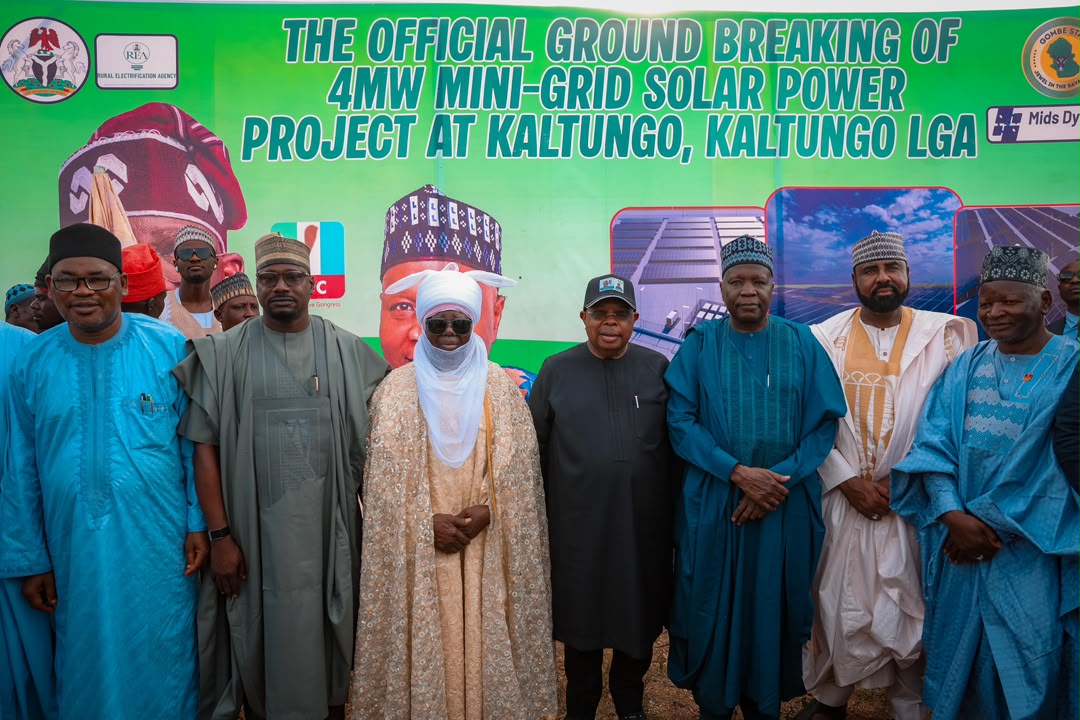
This is evidenced in recent projects of the Federal Government of Nigeria by the Rural Electrification Agency (REA).
In Gombe state, the REA recently commissioned a 1MW renewable energy mini-grid, equipped with 2.4MWh of battery energy storage capacity, in Balanga Local Government Area of Gombe State.
This milestone marks a significant step in the nationwide effort to expand electricity access, strengthen supply reliability, and transform energy infrastructure into a catalyst for local economic development.
In Balanga, the intervention goes deliberately beyond basic electricity supply.
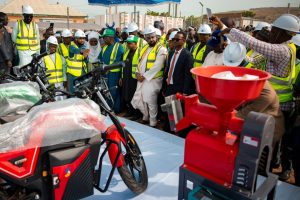
Alongside the new generation and storage infrastructure, the commissioning features the deployment and launch of productive-use equipment including electric tricycles, an electric groundnut oil processing plant, a modular electric rice mill, and multi-flour electric grinding machines. This initiative connects reliable power directly to mobility, agriculture, processing, enterprise, and income generation.
The project represents the evolving philosophy of the Federal Government’s rural electrification programme under the leadership of His Excellency, President Bola Ahmed Tinubu, GCFR: electricity access must translate into economic opportunity.
Under the supervision of the Honourable Minister of Power, Chief Joseph Olasunkanmi Tegbe, the REA is increasingly deploying energy infrastructure around the economic realities of beneficiary communities moving beyond connections to support businesses, agriculture, transportation, public services, and new jobs.
A nationwide pipeline of renewable energy infrastructure
The Balanga commissioning is not an isolated intervention, but rather the latest milestone in a visible and expanding pipeline of renewable energy projects delivered across Nigeria.
In June, the REA commissioned a 505kWp interconnected solar mini-grid in Epe, Lagos State, delivering reliable electricity to five communities and their productive users.
In July, the Federal Government broke ground on 39 mini-grids in Adamawa State with a combined capacity of nearly 27MW including the 10MW Kofare, 2.6MW Saminaka, and 890kW Mbamba interconnected mini-grids alongside a 3.5MW intervention in Kebbi State.
Likewise in Rivers & Plateau states, the Agency launched approximately 11.9MWp of renewable energy infrastructure in Rivers State, before moving to Plateau State for the groundbreaking of the 1.5MW Pankshin interconnected mini-grid.
The momentum increased again in August in Yobe State with the groundbreaking of approximately 13.92MWp of interconnected hybrid solar projects across major residential and commercial load centres.
Meanwhile in September, emphasis shifted from breaking ground to completion. The Federal Government commissioned the 3MW solar-hybrid power plant at Yakubu Gowon University, Abuja, followed by the 581kWp Oke-Oyi interconnected mini-grid in Kwara State.
In October, the REA broke ground on a 17.7MW interconnected mini-grid in Ibadan, Oyo State, designed to improve electricity supply to five communities and unlock additional commercial and industrial activity.
Most recently, that journey arrived in Balanga, Gombe State with 1MW of generation capacity and 2.4MWh of battery storage turning infrastructure into productive economic use.
Projects are being developed. Projects are breaking ground. Projects are being completed and completed projects are being converted into platforms for economic activity.
“We are building an economy around reliable electricity” — Minister of Power
Speaking on the significance of the commissioning in Gombe state recently, the Honourable Minister of Power, Chief Joseph Olasunkanmi Tegbe, described the Balanga project as a practical demonstration of President Tinubu’s vision to use electricity infrastructure to stimulate grassroots economic opportunity.
“President Bola Ahmed Tinubu has been very clear that infrastructure must ultimately improve the lives and livelihoods of Nigerians. What we are commissioning in Balanga reflects that philosophy. We are not simply providing one megawatt of electricity; we are creating the energy platform upon which farmers can process more, businesses can grow, transportation can become cleaner and more affordable, and communities can build new economic opportunities.”
The Minister added, “This is why the productive-use component of this project is particularly important. When electricity powers a rice mill, processes groundnut oil, drives a grinding machine, or charges an electric tricycle, we begin to see the true multiplier effect of energy investment. Our objective is not megawatts for the sake of megawatts. Our objective is megawatts that translate into markets, productivity, jobs, and prosperity.”
The productive-use component of the Balanga project has been structured specifically around the economic characteristics of the beneficiary communities.
For example, the Groundnut Oil Processing Plant provides additional processing capacity within a major agricultural value chain, helping shift economic activity from the sale of raw produce to local value addition.
The Modular Electric Rice Mill supports rice processing closer to production centres while
Multi-Flour Electric Grinding Machines provides essential productive infrastructure for small businesses and households.
In the same vein, Electric Tricycles expands the project’s impact into transportation and mobility, supporting an emerging rural e-mobility ecosystem while reducing dependence on conventional fuels.
Taken together, the interventions create a powerful development chain:
Reliable Electricity > Productive Equipment > Local Processing > Enterprise Growth > Jobs > Higher Household Incomes
“This is the kind of partnership that changes communities” — Governor Inuwa Yahaya
The Executive Governor of Gombe State, His Excellency Muhammadu Inuwa Yahaya described the commissioning as another important outcome of the strategic partnership between the Gombe State Government and the Federal Government through the REA.
“For us in Gombe State, this project is significant because it connects energy directly to the economic strengths of our people. Balanga is an agricultural community. When reliable electricity is combined with rice milling, groundnut processing, flour production, and electric mobility, we are not merely lighting homes we are strengthening an entire local economy,” he said.
The Governor further stated, “Our partnership with the Rural Electrification Agency demonstrates what can be achieved when Federal and State Governments align around a common development objective. We deeply appreciate His Excellency, President Bola Ahmed Tinubu, the Honourable Minister of Power, and the leadership of the REA for translating policy into infrastructure that our people can see, use, and benefit from. This is Renewed Hope made tangible at the community level.”
The Balanga project builds upon sustained collaboration between the Gombe State Government and the REA to expand clean-energy infrastructure across the State, including the 1MW solar mini-grid at Talasse in Balanga, renewable energy infrastructure in Filiya and Shongom, and the hybrid renewable-energy intervention around Balanga Dam.
“Our measure of success is what happens after the electricity arrives” — REA MD/CEO
The Managing Director and Chief Executive Officer of the Rural Electrification Agency, Abba Abubakar Aliyu, stated that Balanga represents the direction in which the REA is taking rural electrification nationally moving away from counting connections alone towards measuring the economic outcomes created by electricity.
“For many years, the conversation around electricity access has understandably focused on how many people we connect and how many megawatts we deploy. Those numbers remain important. But the next frontier is to ask a more fundamental question: what happens after the electricity arrives?”
He continued, “Does the farmer process more of what he produces? Does a young entrepreneur establish a new business? Does the cost of mobility reduce? Can a woman who previously spent hours processing agricultural produce increase her productivity and income? Can businesses operate longer and employ more people? Those are the outcomes that ultimately define successful electrification.”
Aliyu noted that the inclusion of 2.4MWh of battery energy storage demonstrates the REA’s growing emphasis on reliability and quality of supply.
“Access without reliability limits economic impact. This is why we are increasingly integrating storage, intelligent monitoring, productive-use equipment, and sustainable operating models into our interventions. We are building electricity ecosystems, not simply installing power plants.”
Transforming Nigeria’s energy landscape
The Balanga commissioning arrives as the Federal Government scales distributed renewable energy as a complementary pillar of Nigeria’s broader power-sector transformation.
Rather than relying on a single pathway, the Government is simultaneously strengthening conventional grid infrastructure while accelerating interconnected mini-grids, isolated mini-grids, embedded generation, solar home systems, and dedicated renewable-energy solutions for universities, agricultural clusters, markets, and productive communities.
Through the Distributed Access through Renewable Energy Scale-up (DARES) programme and complementary REA interventions, the Federal Government is leveraging public resources to unlock private capital and create a commercially sustainable distributed-energy market.
The ambition is clear: build an electricity-access ecosystem capable of reaching millions of Nigerians while creating opportunities for Renewable Energy Service Companies (RESCOs), manufacturers, financiers, technology companies, agricultural processors, and other enterprises.
Balanga provides a glimpse of what that future looks like.
A mini-grid powers the community.
Battery storage strengthens reliability.
A rice mill transforms agricultural produce.
A groundnut processing plant creates value locally.
Electric grinding machines support micro-enterprises.
Electric tricycles connect people, farms, and markets.
Electricity becomes more than infrastructure, it becomes economic infrastructure.
A national journey that continues
From Lagos to Adamawa, Kebbi to Rivers, Plateau to Yobe, Abuja to Kwara, and Oyo to Gombe, the Federal Government’s distributed-energy programme is steadily moving across Nigeria building the productive ecosystems required to ensure that electricity delivers lasting economic value.
For President Tinubu’s administration, the objective is not simply to count projects commissioned, but to:
Build communities that produce more because electricity is available.
Grow businesses because electricity is reliable.
Create opportunities for young Nigerians through emerging value chains.
Strengthen local economies by unlocking their productive potential.
For the Rural Electrification Agency, the mandate remains clear. From groundbreaking to commissioning. From access to reliability. From megawatts to markets. From electricity to productivity. From connections to prosperity. Community by community. State by state. The work continues.

