News
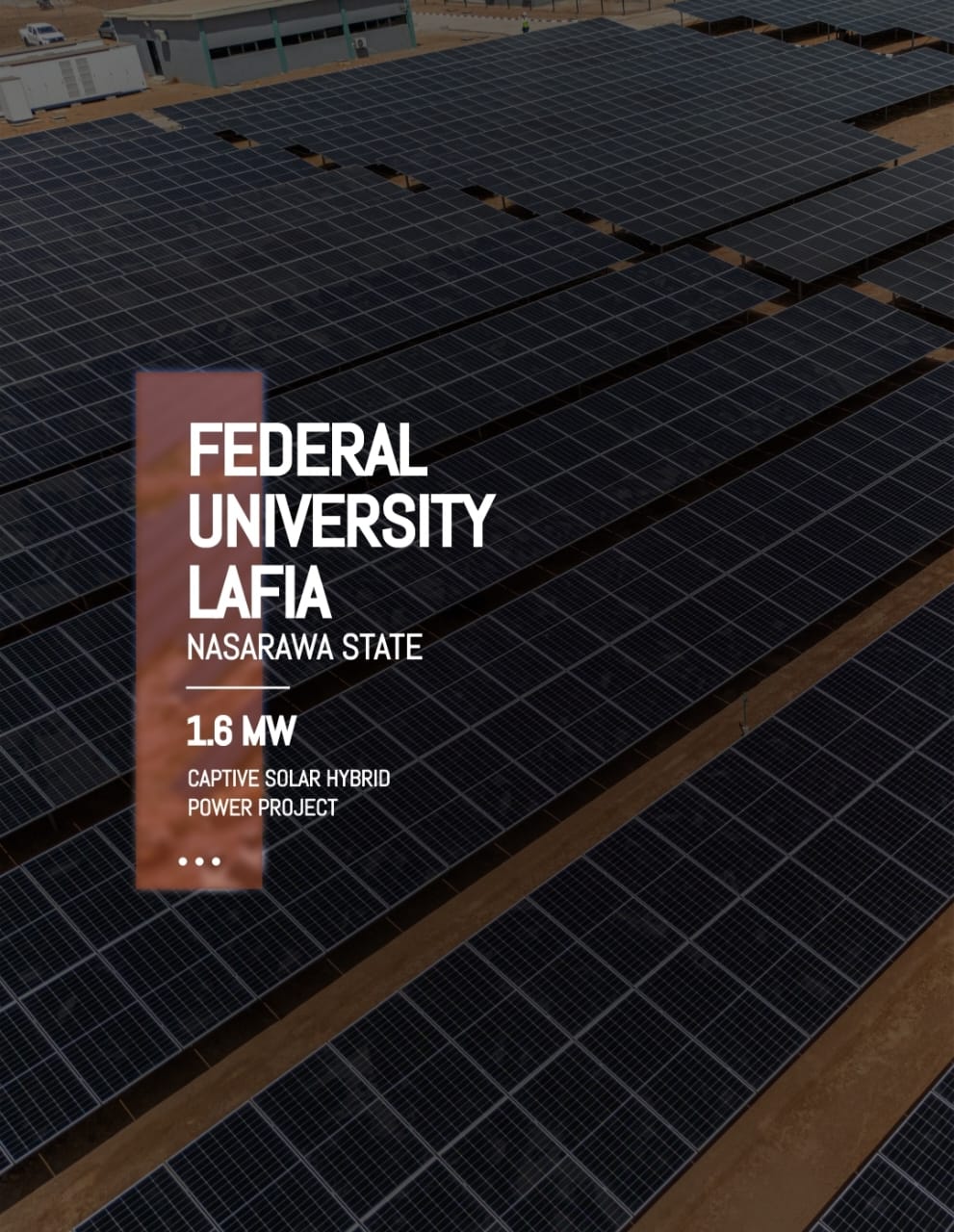
FG commissions 1.6MW hybrid mini-grid, saves Lafia University N30m monthly
FG commissions 1.6MW hybrid mini-grid, saves Lafia University N30m monthly
AJAGBE ADEYEMI TESLIM
SPONSORED BY:H&H
The federal government of Nigeria has commissioned a 1.6-megawatt solar hybrid mini-grid to serve the Federal University Lafia, Nassarawa State saving the university thirty million naira monthly (N30,000,000) on electricity expenditure.
The hybrid power plant comprises an approximately 1.6MWp photovoltaic (PV) solar park configured with a Power Conditioning System (PCS) and an Energy Storage System (ESS) to support power reliability, peak shaving, and the supply of critical loads beyond solar hours.
Speaking on Thursday at the commissioning of the project under the Rural Electrification Agency’s (REA) Energising Education Programme (EEP) in Lafia, Nassarawa State, Nasarawa State Governor, Abdullahi Sule, thanked the President for considering the university, noting that he has reduced the burden on the state.
“My opinion is that we should build as many mini-grids as possible. That is the future of Nigeria’s electrification. To reach those without access, we can focus on mini-grids.”
“This is the practical way to solve our problems. I appreciate that we have a practical President and a practical Minister to tackle these problems head-on,” the Governor said.
Also speaking, the Minister of Power, Joseph Tegbe pledged the Federal Government’s commitment to ensuring every Nigerian has access to electricity.
Echoing the results of the three-month test run of the commissioned facility by the Vice Chancellor, Tegbe noted that it is the desire and commitment of the Nigerian government to ensure that, just as FU Lafia and other universities under the Energizing Education Programme (EEP) are enjoying uninterrupted electricity, other Nigerians will soon experience the same.
The Minister acknowledged that the federal government’s investment in infrastructure that enables people to learn, work, and fulfill their potential is central to President Bola Ahmed Tinubu’s Renewed Hope Agenda.
“Under his leadership, investment in electricity is being directed toward the services and productive activities that improve people’s lives. Here, that commitment finds expression in better conditions for scholarship and a stronger foundation for the aspirations of our young people,” he said.
In his remarks, the Managing Director of the Rural Electrification Agency (REA), Abba Aliyu, noted that the federal government is moving beyond fragmented efforts toward coordinated and scalable electrification programs.
He also applauded the Nasarawa State Governor for being a pacesetter in renewable energy adoption, while also appreciating the support of the funding and development partners, particularly the African Development Bank (AfDB), for piloting the Energizing Education Programme (EEP).
The REA MD further revealed that the agency has financed the completion of 22 mini-grid projects in Nasarawa while disclosing that another 37 mini-grid projects will be developed shortly.
Highlighting how productivity has improved, 300-level student Raimat Abdullahi said stable electricity has allowed her to study for longer periods.
Aliyu noted that this underscores the difference reliable power makes in preventing educational interruptions.
He explained that electricity is about eliminating impossibilities that we cannot imagine, adding, “It is not just about electrifying a university; it is about connecting an entire generation of Nigerians to a world full of opportunities.”
“What we are commissioning is an investment in technology and a competitive ecosystem. Universities are engines of building our future.”
“We are building an interconnected ecosystem of electricity. Our strategy recognizes that electricity must be delivered when it can unlock the greatest socio-economic value across various clusters in the country.”
“Our ambition is to build a renewable economy around the electrification of Nigeria,” Aliyu said.
In his address, the Vice Chancellor of the University, Professor Mohammed Isa Kida noted that the institution has enjoyed uninterrupted power supply since the test run began.
He described the intervention as a strategic initiative that will significantly enhance the university’s capacity to fulfill its mandate, impacting over 30,000 students and staff members.
He noted that project is expected to improve digital and technology service delivery while bolstering practical training opportunities in renewable energy.
Professor Kida also praised the inclusion of a training for women in STEM alongside the project, assuring that the university is committed to safeguarding the facilities to maximize their long-term benefits.

