News
NiMet, Partners Conclude Climate Risk Management Training for Agricultural Extension Professionals
NiMet, Partners Conclude Climate Risk Management Training for Agricultural Extension Professionals
AJAGBE ADEYEMI TESLIM
SPONSORED BY: H&H
The Nigerian Meteorological Agency (NiMet), in collaboration with the International Livestock Research Institute (ILRI), Alliance for a Green Revolution in Africa (AGRA), Stockholm Environment Institute (SEI), Sasakawa Africa Association, and other partners, has concluded the 10-day Climate Risk Management in Agricultural Extension (CRMAE) Training of Trainers workshop in Abuja.
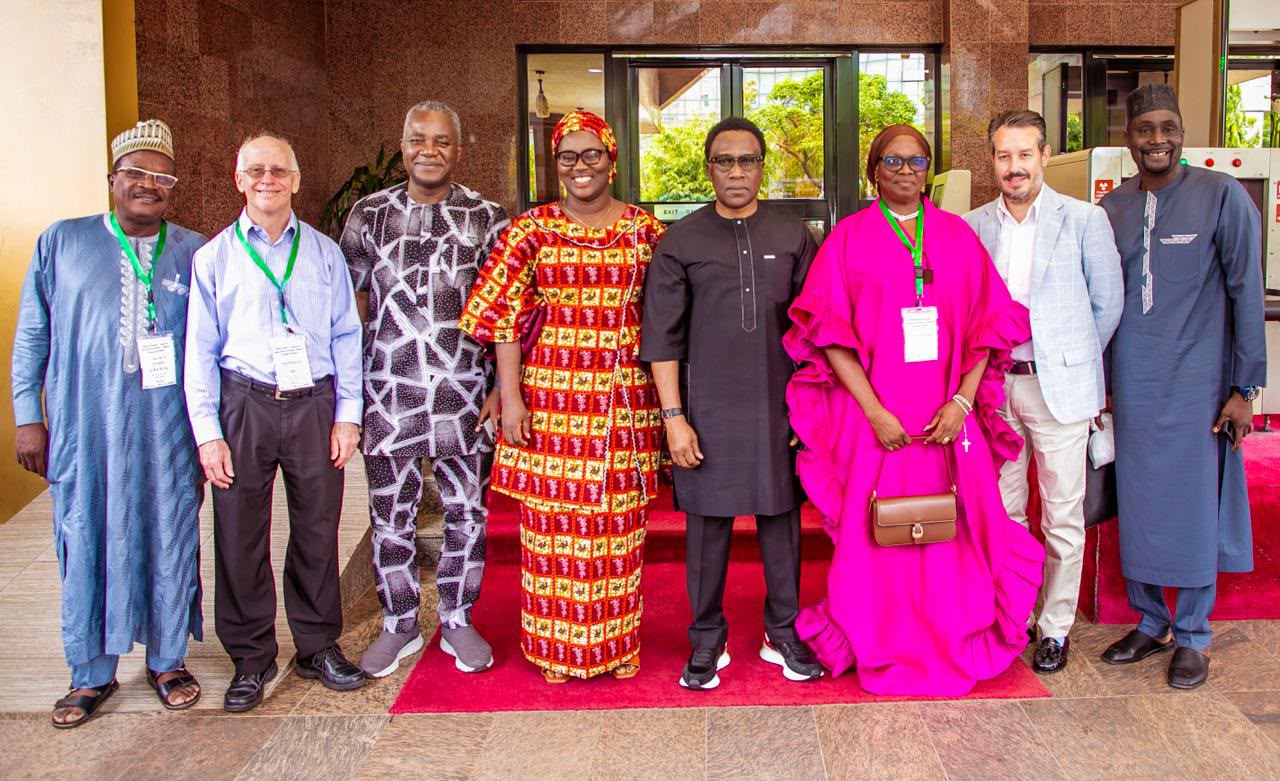
L-R; Dr. Jim Hansen, Dr. Godwin Atser, Country Director, Sasakawa Africa Association; Dr. Esther Ibrahim, Programme Officer, AGRA Nigeria, Prof. Charles Anosike DG/CEO NiMet, Dr. Victoria Pillah of the National Universities Commission (NUC), Mr. Pierre Sibiry, ILRI Representative; Dr James Ijampy
The closing ceremony was chaired by the Director-General and Chief Executive Officer of NiMet, Prof. Charles Anosike and attended by Dr. Esther Ibrahim, Programme Officer, AGRA Nigeria, representing the AGRA Country Director; Mr. Pierre Sibiry, ILRI Representative; Dr. Jim Hansen, Resource Person; Dr. Godwin Atser, Country Director, Sasakawa Africa Association; and Dr. Victoria Pillah of the National Universities Commission (NUC).
Addressing participants, Prof. Anosike described agricultural extension officers as the critical link between climate services and farmers, noting that they translate weather and climate information into practical guidance on planting dates, crop selection, and water management. He said the training reflects the collective commitment of NiMet and its partners to ensuring that climate information is accessible, understandable, and useful to farmers across Nigeria.
He noted that the Nigeria-adapted Climate Risk Management in Agricultural Extension curriculum will strengthen the capacity of extension personnel to deliver climate-informed advisory services. Citing evidence that effective, localized extension services can increase agricultural productivity by 20–30 percent while reducing vulnerability to climate shocks, he urged participants to cascade the knowledge gained through extension networks, farmer groups, cooperatives, and rural communities. He stressed that the programme’s success would ultimately be measured by improved farmer livelihoods, stronger climate resilience, and enhanced national food security.
He reaffirmed NiMet’s commitment to institutionalizing and promoting the widespread adoption of the Climate Risk Management in Agricultural Extension curriculum as part of the Agency’s efforts to strengthen climate services for agriculture and contribute to national food security.
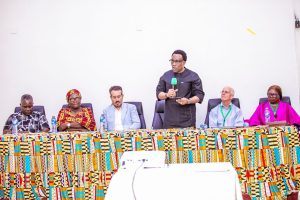 Delivering the closing remarks on behalf of the AGRA Country Director, Dr. Esther Ibrahim described climate risk management as an essential component of modern agricultural extension. She encouraged participants to apply the knowledge acquired during the training to provide farmers with timely, reliable, and actionable climate information that supports informed decision-making and resilient agricultural production.
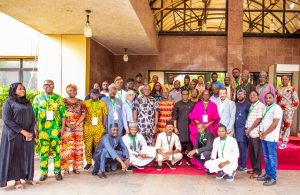
The workshop concluded with the presentation of certificates to participants, who are expected to cascade the training across extension networks and farming communities, helping to bridge the gap between climate science and farm-level decision-making while improving farmers’ resilience to climate risks.

