News
NiMet Reaffirms Commitment To Climate-Smart Agribusiness Resilience At FGN/IFAD CSAPR Project Launch
NiMet Reaffirms Commitment To Climate-Smart Agribusiness Resilience At FGN/IFAD CSAPR Project Launch
AJAGBE ADEYEMI TESLIM
SPONSORED BY: H&H
The Federal Government of Nigeria (FGN), in collaboration with the International Fund for Agricultural Development (IFAD), the Special Agro-Industrial Processing Zones (SAPZ) Programme, and the Nigerian Meteorological Agency (NiMet), has officially launched the Climate-Smart Agribusiness Partnership for Resilience (CSAPR) Project to strengthen climate resilience, improve agricultural productivity, and promote the use of Climate Information Services (CIS) across Nigeria’s agricultural value chains.
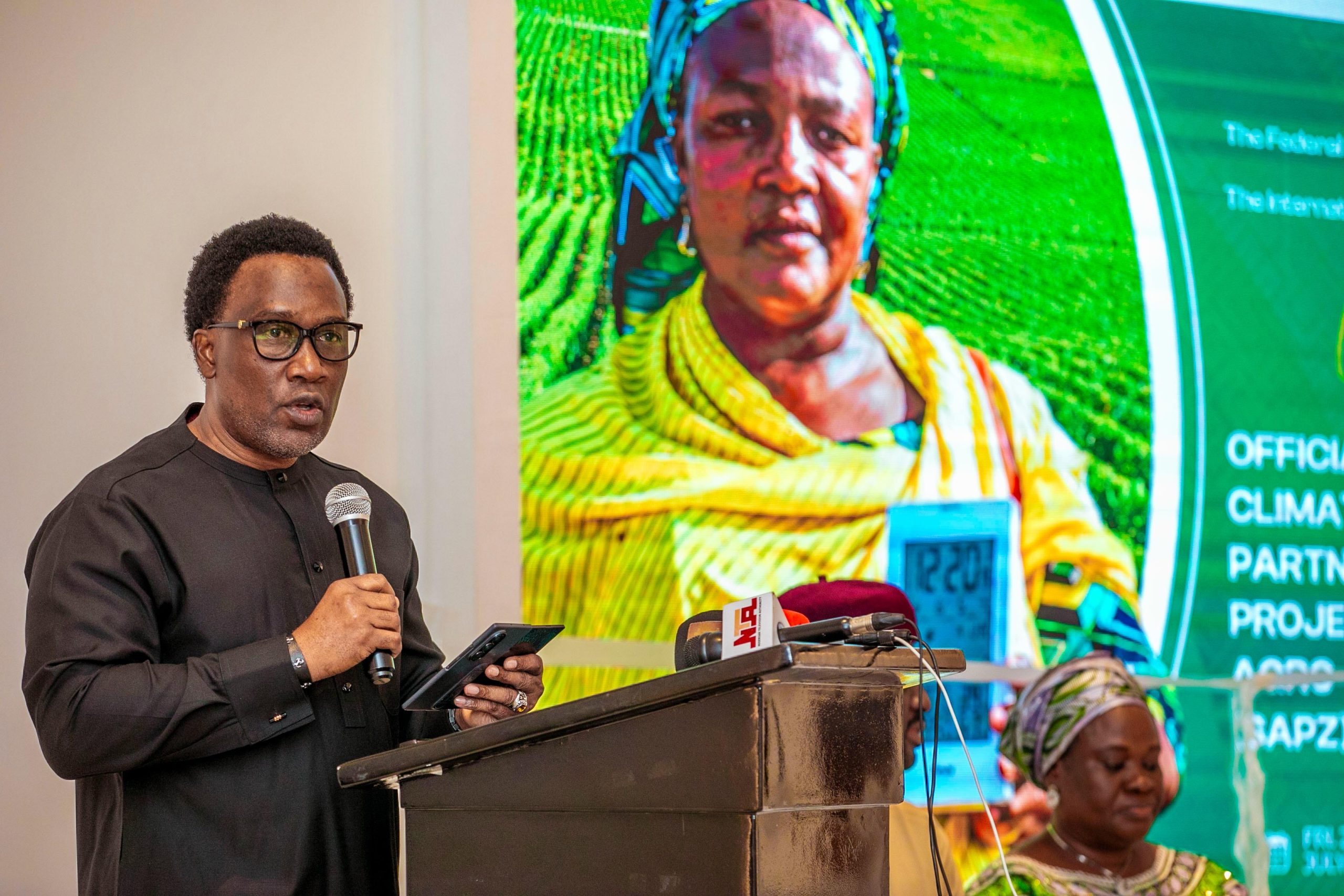
Speaking at the launch held on Friday, 24 July 2026, in Abuja, the Permanent Secretary of the Federal Ministry of Agriculture and Food Security, Dr. Marcus Olaniyi Ogunbiyi, described the project as a major milestone in Nigeria’s drive towards a more productive, inclusive, and climate-resilient agricultural sector. He said the initiative would integrate Climate Information Services into agribusiness solutions through collaboration among government institutions, development partners, financial institutions, the private sector, and farmer organizations.
Dr. Ogunbiyi acknowledged the contributions of key partners, including NiMet, IFAD, the Gates Foundation, and other stakeholders, for their commitment to climate-smart agriculture and resilient food systems. He urged all partners to sustain the spirit of collaboration to expand climate-smart agribusiness opportunities, unlock financing for farmers, and improve livelihoods.

Also, the Director-General and Chief Executive Officer of the Nigerian Meteorological Agency (NiMet) and Permanent Representative of Nigeria with the World Meteorological Organization (WMO), Prof. Charles Anosike, described the project as a timely and strategic initiative that aligns with the Federal Government’s Renewed Hope Agenda. He emphasized that timely, accurate, accessible, and actionable weather, climate, and water-related information is critical to climate-smart agriculture, sustainable food systems, and building resilience across Nigeria’s agricultural value chains.
According to Prof. Anosike, farmers, agribusinesses, financial institutions, insurers, processors, logistics providers, and investors all require reliable climate intelligence to make informed decisions, manage risks, safeguard investments, and improve productivity. He emphasized the need to translate climate information into simple, localized, and actionable advisories while strengthening public-private partnerships to expand the delivery of climate services to farmers and agribusinesses. He reaffirmed NiMet’s commitment to supporting the project through its Seasonal Climate Prediction, agrometeorological bulletins, impact-based forecasts, early warning advisories, and digital climate advisory platforms.
In her remarks, the IFAD Country Director, Ms. Dede Ekoue, commended the Federal Ministry of Agriculture and Food Security for its leadership and acknowledged NiMet’s technical contributions to the design of the project. She noted that the CSAPR Project will strengthen financially viable public-private partnerships that integrate Climate Information Services into agricultural value chains, enabling farmers and agribusinesses to better adapt to climate variability while improving resilience, productivity, and investment.
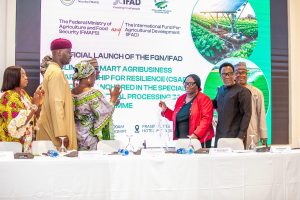
Speaking on behalf of the National Programme Coordinator of the SAPZ Programme, Dr. Kabir Yusuf, the representative highlighted early achievements under the project, including the installation of automated weather stations in Ogun and Kano States, the commencement of climate information dissemination, and the distribution of digital devices to farmer organization leaders to facilitate timely weather advisory services.
The CSAPR Project is a Federal Government of Nigeria initiative financed by the Gates Foundation, implemented by the Federal Ministry of Agriculture and Food Security through the SAPZ Programme with support from IFAD and NiMet, and is expected to strengthen climate resilience, enhance food security, and improve the livelihoods of smallholder farmers by embedding Climate Information Services into sustainable agribusiness solutions delivered through effective public-private partnerships.

